The ideal gas law can be used to calculate the volume of gaseous products or reactants as needed. A gas collected in such a way is not pure, however, but contains a significant amount of water vapor. The measured pressure must therefore be corrected for the vapor pressure of water, which depends strongly on the temperature. The ideal gas law specifies that the volume occupied by a gas depends upon the amount of substance as well as temperature and pressure. Standard temperature and pressure -- usually abbreviated by the acronym STP -- are 0 degrees Celsius and 1 atmosphere of pressure.

Parameters of gases important for many calculations in chemistry and physics are usually calculated at STP. An example would be to calculate the volume that 56 g of nitrogen gas occupies. Eventually, these individual laws were combined into a single equation—the ideal gas law—that relates gas quantities for gases and is quite accurate for low pressures and moderate temperatures. We will consider the key developments in individual relationships , then put them together in the ideal gas law. The behavior of gases can be described by several laws based on experimental observations of their properties.

The pressure of a given amount of gas is directly proportional to its absolute temperature, provided that the volume does not change (Amontons's law). The volume of a given gas sample is directly proportional to its absolute temperature at constant pressure (Charles's law). The volume of a given amount of gas is inversely proportional to its pressure when temperature is held constant (Boyle's law). Under the same conditions of temperature and pressure, equal volumes of all gases contain the same number of molecules (Avogadro's law). The ideal gas law formula states that pressure multiplied by volume is equal to moles times the universal gas constant times temperature. Gases whose properties of P, V, and T are accurately described by the ideal gas law are said to exhibit ideal behavior or to approximate the traits of an ideal gas.

An ideal gas is a hypothetical construct that may be used along with kinetic molecular theory to effectively explain the gas laws as will be described in a later module of this chapter. Although all the calculations presented in this module assume ideal behavior, this assumption is only reasonable for gases under conditions of relatively low pressure and high temperature. In the final module of this chapter, a modified gas law will be introduced that accounts for the non-ideal behavior observed for many gases at relatively high pressures and low temperatures. This relationship between temperature and pressure is observed for any sample of gas confined to a constant volume.

An example of experimental pressure-temperature data is shown for a sample of air under these conditions in Figure 9.11. An example of experimental pressure-temperature data is shown for a sample of air under these conditions in . This ideal gas law calculator will help you establish the properties of an ideal gas subject to pressure, temperature, or volume changes. Read on to learn about the characteristics of an ideal gas, how to use the ideal gas law equation, and the definition of the ideal gas constant. The state of a gas is determined by the values of certain measurable propertieslike the pressure,temperature,andvolumewhich the gas occupies. The values of these variables and the state of the gas can be changed.

On this figure we show a gas confined in a blue jar in two different states. On the left, in State 1, the gas is at a higher pressure and occupies a smaller volume than in State 2, at the right. We can represent the state of the gas on a graph of pressure versus volume, which is called ap-V diagramas shown at the right. In some of these changes, we do work on, or have work done by the gas, in other changes we add, or remove heat. Thermodynamics helps us determine the amount of work and the amount of heat necessary to change the state of the gas.Notice that in this example we have a fixed mass of gas. We can therefore plot either thephysical volumeor thespecific volume, volume divided by mass, since the change is the same for a constant mass.
The volume and temperature are linearly related for 1 mole of methane gas at a constant pressure of 1 atm. If the temperature is in kelvin, volume and temperature are directly proportional. Charles's law states that the volume of a given amount of gas is directly proportional to its temperature on the kelvin scale when the pressure is held constant. In thermodynamics, the volume of a system is an important extensive parameter for describing its thermodynamic state. The specific volume, an intensive property, is the system's volume per unit of mass. Volume is a function of state and is interdependent with other thermodynamic properties such as pressure and temperature.

For example, volume is related to the pressure and temperature of an ideal gas by the ideal gas law. One mole of any gas occupies the same volume when measured under the same conditions of temperature and pressure. In this experiment, the volume of one mole of hydrogen is calculated at room temperature and pressure. Specific volume is defined as the number of cubic meters occupied by one kilogram of matter. It is the ratio of a material's volume to its mass, which is the same as the reciprocal of its density.

In other words, specific volume is inversely proportional to density. Specific volume may be calculated or measured for any state of matter, but it is most often used in calculations involving gases. Is the volume occupied by one mole of a chemical element or a chemical compound. It can be calculated by dividing the molar mass by mass density (ρ). Molar gas volume is one mole of any gas at a specific temperature and pressure has a fixed volume.

Imagine a system that consists of a sample of ammonia trapped in a piston and cylinder, as shown in the figure below. Assume that the pressure of the gas pushing up on the piston just balances the weight of the piston, so that the volume of the gas is constant. Now assume that the gas decomposes to form nitrogen and hydrogen, increasing the number of gas particles in the container.

If the temperature and pressure of the gas are held constant, this means that the volume of the gas must increase. If we partially fill an airtight syringe with air, the syringe contains a specific amount of air at constant temperature, say 25 °C. This example of the effect of volume on the pressure of a given amount of a confined gas is true in general. Decreasing the volume of a contained gas will increase its pressure, and increasing its volume will decrease its pressure.
In fact, if the volume increases by a certain factor, the pressure decreases by the same factor, and vice versa. Volume-pressure data for an air sample at room temperature are graphed in Figure 9.13. Volume-pressure data for an air sample at room temperature are graphed in . Volume-pressure data for an air sample at room temperature are graphed in Figure 5. How can I calculate the speed at which gas goes from one volume to the other. Using the ideal gas laws, I can calculate the final properties of the gases in each volume, but that isn't what I'm looking for.
To calculate the concentration in metric dimensions, with other temperature and pressure conditions the Ideal Gas Law comes in handy. The volume divided by the number of molecules represents the molar volume of the gas with a temperature and pressure . Imagine filling a rigid container attached to a pressure gauge with gas and then sealing the container so that no gas may escape. If the container is cooled, the gas inside likewise gets colder and its pressure is observed to decrease. Since the container is rigid and tightly sealed, both the volume and number of moles of gas remain constant. If we heat the sphere, the gas inside gets hotter (Figure 9.10) and the pressure increases.
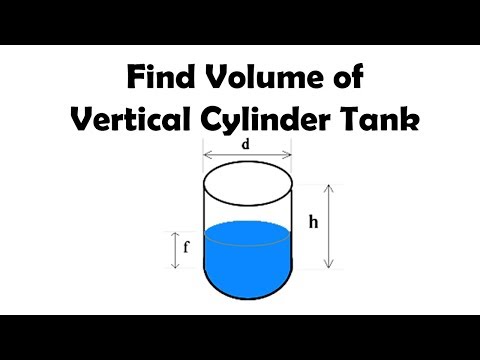
Volume is the quantification of the three-dimensional space a substance occupies. By convention, the volume of a container is typically its capacity, and how much fluid it is able to hold, rather than the amount of space that the actual container displaces. Volumes of many shapes can be calculated by using well-defined formulas. In some cases, more complicated shapes can be broken down into simpler aggregate shapes, and the sum of their volumes is used to determine total volume.
The volumes of other even more complicated shapes can be calculated using integral calculus if a formula exists for the shape's boundary. Beyond this, shapes that cannot be described by known equations can be estimated using mathematical methods, such as the finite element method. Alternatively, if the density of a substance is known, and is uniform, the volume can be calculated using its weight. This calculator computes volumes for some of the most common simple shapes.

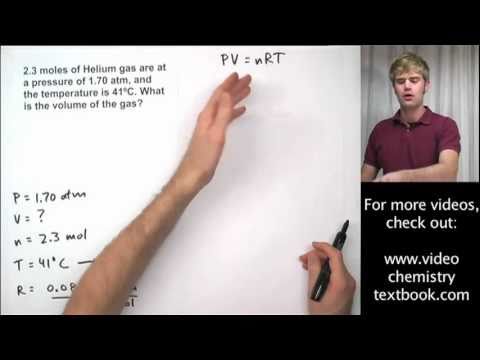
If we heat the sphere, the gas inside gets hotter () and the pressure increases. This means equal amounts of moles of gases occupy the same volume under the same conditions of temperature and pressure. The ideal gas equation contains five terms, the gas constant R and the variable properties P, V, n, and T. Specifying any four of these terms will permit use of the ideal gas law to calculate the fifth term as demonstrated in the following example exercises.
If we heat the sphere, the gas inside gets hotter and the pressure increases. Because the gas is less dense than liquid water, it bubbles to the top of the bottle, displacing the water. Eventually, all the water is forced out and the bottle contains only gas. To understand how the ideal gas equation and the stoichiometry of a reaction can be used to calculate the volume of gas produced or consumed in a reaction. As mentioned above, there are several options for changing the state of a gas from one state to another. So we might expect that the amount of work done on, or by a gas could be different depending on exactly how the state is changed.

As an example, on the graph on the figure, we show a curved black line from State 1 to State 2 of our confined gas. This line represents a change brought about by removing weights and decreasing the pressure and allowing the volume to adjust according to Boyle's law with no heat addition. The line is curved and the amount of work done on the gas is shown by the red shaded area below this curve. We could, however, move from State 1 to State 2 by holding the pressure constant and increasing the volume by heating the gas using Charles' law. The resulting change in state proceeds from State 1 to an intermediate State "a" on the graph.

State "a" is at the same pressure as State 1, but at a different volume. If we then remove the weights, holding a constant volume, we proceed on to State 2. The work done in this process is shown by the yellow shaded area. Using eitherprocess we change the state of the gas from State 1 to State 2. But the work for the constant pressure process is greater than the work for the curved line process.
The work done by a gas not only depends on the initial and final states of the gas but also on the process used to change the state. Different processes can produce the same state, but produce different amounts of work. We can use the ideal gas equation to calculate the volume of 1 mole of an ideal gas at 0°C and 1 atmosphere pressure. Charles's law is an experimental gas law that describes how gases tend to expand when heated. When the pressure on a sample of a dry gas is held constant, the Kelvin temperature and the volume will be in direct proportion. This law describes how a gas expands as the temperature increases; conversely, a decrease in temperature will lead to a decrease in volume.
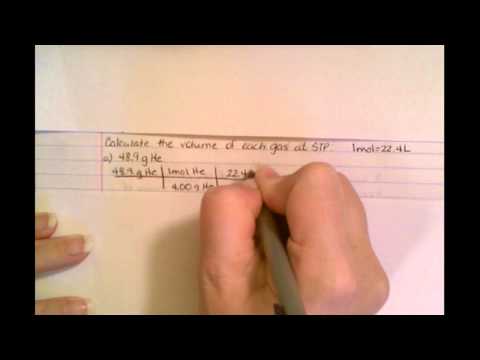
Examples and practice problems of solving equation stoichiometry questions with gases. We calculate moles with 22.4 L at STP, and use molar mass and mole ratios to figure out how many products or reactants we have. The most common molar volume is the molar volume of an ideal gas at standard temperature and pressure (273 K and 1.00 atm). Temperature is sometimes measured with a gas thermometer by observing the change in the volume of the gas as the temperature changes at constant pressure. The hydrogen in a particular hydrogen gas thermometer has a volume of 150.0 cm3 when immersed in a mixture of ice and water (0.00 °C).

When immersed in boiling liquid ammonia, the volume of the hydrogen, at the same pressure, is 131.7 cm3. Find the temperature of boiling ammonia on the kelvin and Celsius scales. The appropriate formula from the ones listed above is chosen automatically when you use this ideal gas law calculator. A container containing hydrogen gas is heated such that its volume increases by 40% and pressure decreases to 80% of its original value. If the original temperature was – 130C, calculate the temperature to which the gas was heated.
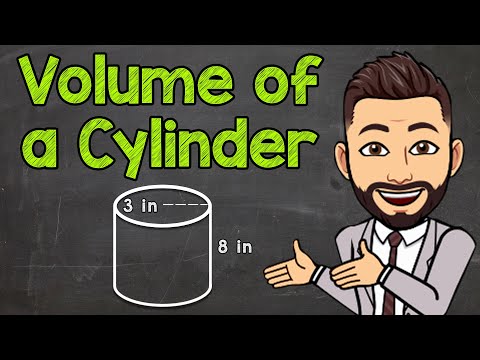
How To Calculate The Volume Of Each Gas Sample At Stp From the units in the universal gas constant, you can see that volume is in liters, pressure in atm, and temperature in Kelvin. This means we must convert the units of pressure from psi to atm. For example, the space that a substance or 3D shape occupies or contains. Volume is often quantified numerically using the SI derived unit, the cubic metre. Volumes of some simple shapes, such as regular, straight-edged, and circular shapes can be easily calculated using arithmetic formulas. Volumes of complicated shapes can be calculated with integral calculus if a formula exists for the shape's boundary.

One-dimensional figures and two-dimensional shapes are assigned zero volume in the three-dimensional space. Work can't be a state function because it is proportional to the distance an object is moved, which depends on the path used to go from the initial to the final state. If work isn't a state function, then heat can't be a state function either. According to the first law of thermodynamics, the change in the internal energy of a system is equal to the sum of the heat and the work transferred between the system and its surroundings. Energy is transferred along with the genetic material and so obeys the first law of thermodynamics. Energy is transferred—not created or destroyed—in the process.

When work is done on a cell or heat transfers energy to a cell, the cell's internal energy increases. When a cell does work or loses heat, its internal energy decreases. For a more precise equation of state you might want to use the van der Waals equation calculator instead of the ideal gas law calculator above. The gas law calculator uses a combination of several formulas for the behavior of gases which can be derived from four separate gas law formulas and result in the ideal gas formula shown below.

Today's more and more there is an interest to express gas concentrations in metric units, i.e. µg/m3. Although expressing gaseous concentrations in µg/m3 units, has the advantage of metric expression, it has the disadvantage of being greatly influenced by changes in temperature and pressure. Additionally, because of difference in molecular weight, comparisons of concentrations of different gases are difficult. Chemistry in society Getting the most from reactantsThe molar volume (litres mol-1) is the volume occupied by one mole of any gas at a certain temperature and pressure. The molar volume is the same for all gases at the same temperature and pressure.

1 mole of any gas occupies 22.4 dm3 at stp (standard temperature and pressure, taken as 0°C and 1 atmosphere pressure). You may also have used a value of 24.0 dm3 at room temperature and pressure (taken as about 20°C and 1 atmosphere). If the chamber's volume is held constant while some molecules are removed, the density decreases and the specific volume increases. If the chamber expands while the number of molecules remains constant, the gas density decreases and the specific volume increases. The line stops at 111 K because methane liquefies at this temperature; when extrapolated, it intersects the graph's origin, representing a temperature of absolute zero. B Use the ideal gas law to determine the volume of O2 required under the given conditions.
Be sure that all quantities are expressed in the appropriate units. To find any of these values, simply enter the other ones into the ideal gas law calculator. To calculate volume for a stock movement, you enter the dip readings from your tank strappings table information. You must enter them in increments consistent with the strappings units set up on the tank strappings table (centimeters, feet/inches, fractions).

If the gas flow rate through the piping system is low enough , the gas expansion in the higher pressure tank can be regarded as adiabatic and reversible. Therefore, for any specified decrease in the mass of gas in the tank, one can determine the temperature and pressure in the tank . Application of the first law of thermodynamics to the overall system of tanks and piping can then be used to get the temperature and pressure in the lower pressure tank as a function of time. When equations connect two or more properties that describe the state of the system, they are called equations of state. Avagadro's Law- Gives the relationship between volume and amount of gas in moles when pressure and temperature are held constant.
The major issue with the idea gas law is that it neglects both molecular size and intermolecular attractions, therefore it is most accurate for monatomic gases at high temperatures and low pressures. With lower densities the neglect of molecular size becomes less critical since the average distance between adjacent molecules becomes much larger relative to the size of the molecules themselves. Increasing temperature means higher thermal kinetic energy which diminishes the relative importance of intermolecular attractions. At the same temperature and pressure equal volumes of all gasses contain the same number of molecules. Gases are all around us in the air, and they need to be measured too. There are specific tools used to measure the volume of gases along with formulas.